In this tutorial, we'll provide a quick rundown of each part in the kit, to help reinforce your understanding of the component. For some parts, we'll include an example application, in case you're in need of a circuit to plug your new toys into.
In this guide we will familiarize ourselves with the hardware, explain how to connect the display to your microcontroller of choice, cover how to install the Arduino libraries, and give an overview of the software examples that you can start off with.
This tutorial covers how to get CO2 and other environmental readings from the STC31 using both Arduino and MicroPython when connecting the CO2 Sensor Breakout to a compatible development board over Qwiic.
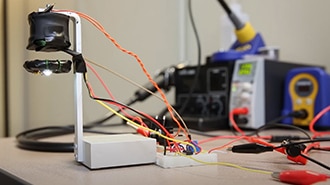
In this tutorial we'll build a basic magnetic levitator. This guide will go over some of the theory, how to use a magnetic field sensor, and how to use one to build a basic levitation circuit.
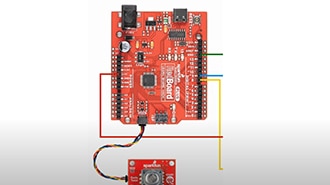
In this tutorial, we'll walk you through using the SparkFun Audio Player Breakout in combination with the Qwiic Twist to let you select and play tracks from a microSD card. It's a compact and powerful way to add audio interactivity to your prototype using simple I2C and serial connections.
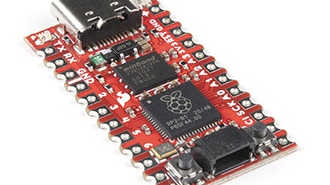
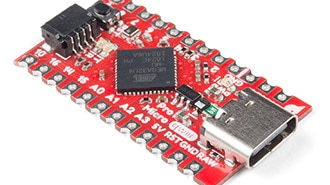
The Pro Micro RP2040 is a low-cost, high-performance board with flexible digital interfaces featuring the Raspberry Pi Foundation's RP2040 microcontroller. The board uses well known Pro Micro footprint with castellated mounting holes.
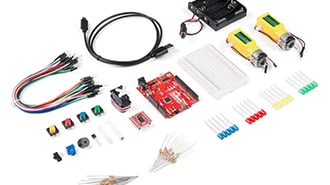
The SparkFun Tinker Kit is your starter tool kit for beginning with embedded electronics, robotics and citizen science using the SparkFun RedBoard Qwiic without breaking the bank. This guide contains all the information you will need to explore the 11 circuits of the Tinker Kit.
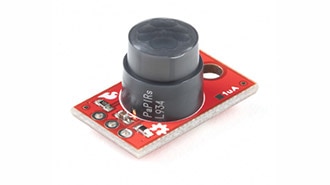
Looking to add some motion detection to a project you are working on? The SparkFun PIR Breakout - 170uA (EKMC4607112K) and SparkFun PIR Breakout - 1uA (EKMB1107112) might be just the thing!
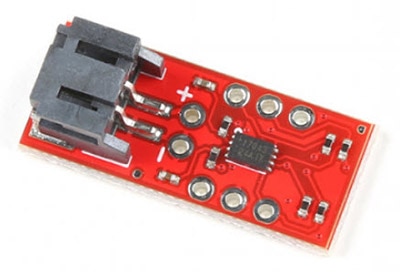
The SparkFun LiPo Fuel Gauge - MAX17043 connects your LiPo battery to your project and uses a sophisticated algorithm to detect the relative state of charge and direct A/D measurement of battery voltage.


 设置
设置
 快速交货
快速交货
 免运费
免运费
 国际贸易术语
 支付类型
支付类型


 市场产品
市场产品