设置
设置
 快速交货
快速交货
 免运费
免运费
 国际贸易术语
 支付类型
支付类型


 市场产品
市场产品


How to Choose the Right Patch Panel for Your Network Infrastructure
Selecting the right patch panel is a critical decision when designing or upgrading a structured cabling system. The correct choice ensures efficient cable management, reliable performance, and scalability for future network expansion.
Whether you are installing a small office network or managing a high-density data center environment, understanding the key differences between patch panel types will help you make the right investment.
Understanding Your Network Requirements - Network Size and Application
Different networks require different considerations when choosing patch panels:
- Small office home networks typically require compact solutions such as 12 or 24 port panels.
- Commercial and enterprise networks benefit from higher port density to support structured cabling systems.
- Data centers require high-density patch panels designed for scalability and efficient rack usage.
Planning for Future Expansion
It is important to consider future growth. Selecting a patch panel with additional capacity can reduce installation time and costs later on. For example, choosing a 24 or 48 port panel instead of a smaller option allows room for expansion without replacing existing infrastructure.
Types of Patch Panels
Rack-Mount Patch Panels
- Designed for standard 19-inch racks
- Ideal for server rooms and data cabinets
- Provide high-density connectivity in a 1U form factor
Example products:
- FIBASource NT-RGRS-17EO 12 Port Cat6 Patch Panel
- FIBASource NC-79QB-9Z33 24 Port Cat6 Patch Panel with Inline Keystone
- FIBASource H2-P8BN-PVA9 24 Port Cat6 Patch Panel
Wall-Mount Patch Panels
- Smaller installations
- Limited rack space environments
- Quick-access network points
Loaded vs Unloaded Panels
- Loaded patch panels are pre-configured and ready to install, reducing setup time.
- Unloaded patch panels allow flexibility for custom configurations using keystone jacks.
Choosing the Right Port Density
- 12 Port Panels – Ideal for small installations or home networks
- 24 Port Panels – Suitable for growing office networks
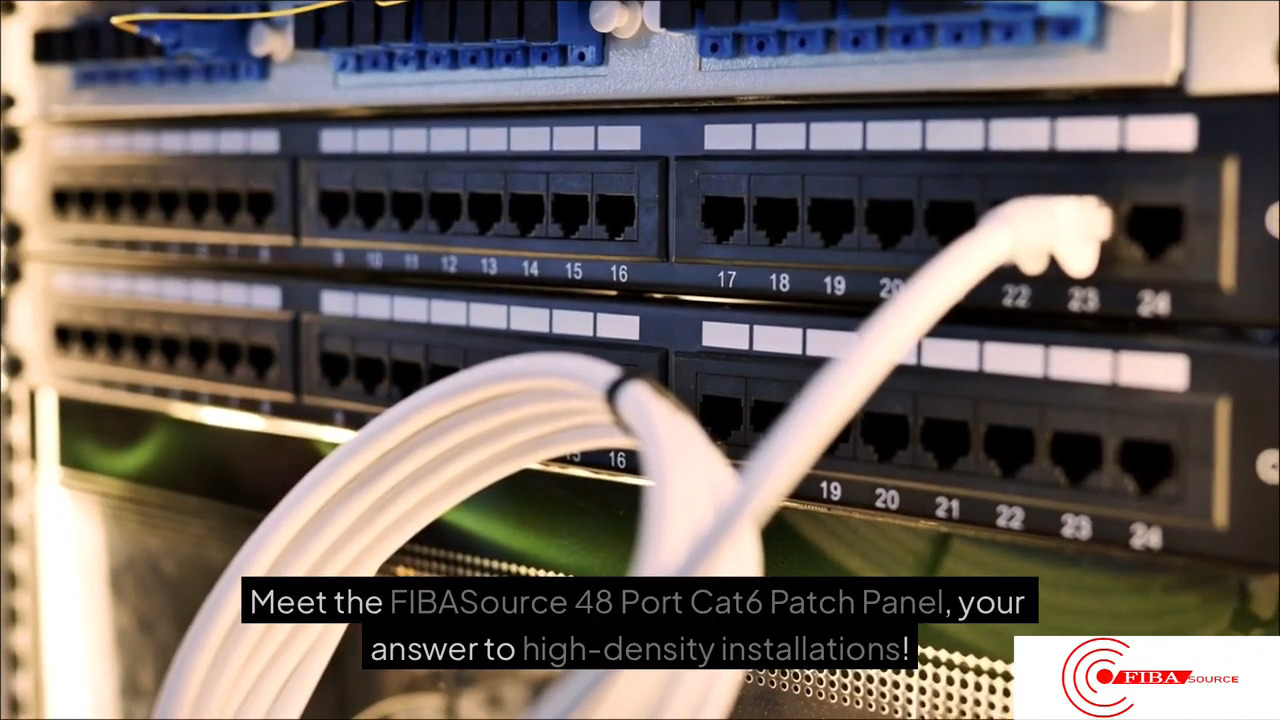
- 48 Port Panels – Designed for high-density environments and professional installations
Key Technical Considerations
- Category Rating – Cat6 and Cat6A panels support high-speed Ethernet, including 10G applications
- Compatibility – Ensure compatibility with T568A and T568B wiring standards
- Build Quality – Look for durable construction and reliable IDC termination blocks
- Cable Management – Integrated cable management improves airflow and organization
FIBASource Patch Panel Solutions
FIBASource provides reliable, high-performance patch panels designed for structured cabling environments. Learn more at https://fibasource.com.
Featured products available on DigiKey:
 Figure 1: FIBASource’s patch panel features. (Image source: FIBASource)
Conclusion
Choosing the correct patch panel is essential for building a structured, scalable, and high-performing network. By understanding your network requirements, selecting the appropriate port density, and choosing high-quality components, you can ensure long-term performance and easier maintenance.
关于此作者

FIBAsource specializes in Fibre Optic, Data Networking Tooling, and accessories. FIBAsource tools and equipment have been researched, tested both in the lab and on the job, alongside competing products to ensure the best quality is provided. They have put together a catalog to ensure an operator has the best quality tooling to allow them to carry out any task at hand from testing, network cabling, new installations, splicing and connecting.

Have questions or comments? Continue the conversation on TechForum, Digi-Key's online community and technical resource.
Visit TechForum